
RFID FILE
TRACKING
SYSTEM
Automated Tracking | Real-Time Visibility | Complete Audit Trails
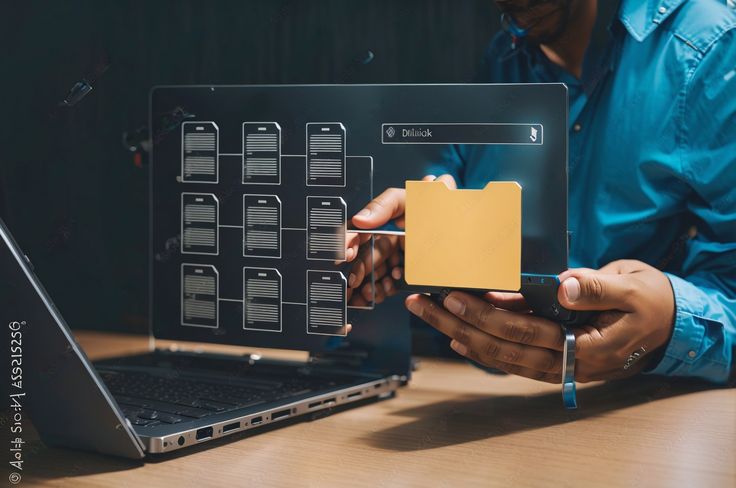
Executive Summary
In today's fast-paced business environment, managing physical documents efficiently is critical for compliance, operational effectiveness, and data security. Traditional methods for file tracking—manual logs, sign-in/out sheets, or verbal confirmations—are inefficient, prone to human error, and lack real-time visibility. These challenges lead to misplacement of files, delays, and compliance risks.
This document proposes the implementation of an RFID-based File Tracking System combined with a Smart File Box installed in each office cabin. This system automates the process of tracking file movements using RFID technology, ensuring seamless check-in/check-out, real-time location visibility, and enhanced security.
This document covers solution architecture, hardware and software components, technical specifications, use cases, benefits, risks, cost analysis, implementation roadmap, and sample UI mockups for business stakeholder review.
Key Objectives
Problem Statement
Organizations often face operational inefficiencies in managing physical files. The absence of automation increases costs, reduces productivity, and exposes the organization to compliance penalties.
File Misplacement
Lack of visibility leads to lost or misplaced files.
No Real-Time Tracking
Users cannot identify the current holder or location of a file.
Time-Consuming Searches
Employees spend hours locating documents, delaying processes.
Audit Challenges
Manual logs are error-prone and unreliable for compliance reporting.
Proposed Solution
RFID-based File Tracking System leverages RFID tags attached to files, RFID readers embedded in a Smart File Box, and software applications for monitoring and reporting.
RFID Tags
Unique identifiers for each file.
Smart File Box
A secure container with built-in RFID readers placed in each office cabin.
RFID Tab Top Readers
Detect file movement in/out of the box and optionally at entry/exit points.
Central Database & Application Server
Stores and processes file status and movement logs.
Web & Mobile Applications
Provide real-time visibility, search functionality, notifications, and reporting.
Use Cases
File Check-In/Check-Out
Scenario:
- Employee places file inside Smart File Box.
- RFID reader detects tag → middleware updates DB.
- Status updated to Checked-In.
- Removing file changes status to Checked-Out.
File Location Search
Scenario:
User searches file ID/name → system displays last detected location and timestamp.
Unauthorized Movement Alert
Scenario:
RFID reader at exit detects file moving out of restricted area → sends alert.
SLA Monitoring for File Return
Scenario:
High-priority file not returned within X hours → system sends escalation notification.
Audit and Reporting
Scenario:
Generate complete movement logs by date, department, or user.
Process Flow Diagram
RFID Tag
File tagged with unique identifier
Smart File Box
File placed in box
RFID Reader
Detects and reads tag
Middleware
Processes data
Database
Stores information
Application
User queries/reports
Benefits
Operational Efficiency
Reduces search time by 90%. Automated tracking eliminates manual logs.
Security and Compliance
Real-time alerts for unauthorized movement. Full audit trail for legal/regulatory compliance.
Improved Productivity
Employees focus on core tasks instead of searching files.
Scalability
Can scale across departments and locations.

Application
The RFID-based File Tracking System provides a secure, automated, and scalable solution for managing physical files. It improves efficiency, ensures compliance, and delivers significant ROI through time and cost savings. By adopting this solution, the organization will move closer to a digitally enabled workspace while maintaining control over critical physical assets. RFID file tracking has wide-ranging applications across multiple industries and departments. It plays a crucial role in environments where document security, traceability, and rapid retrieval are essential. For example, in government offices and legal institutions, RFID ensures that confidential records, case files, and official documents are always accounted for, reducing the risk of misplacement or unauthorized access. RFID file tracking is also highly valuable in corporate offices, archives, libraries, and educational institutions, where large volumes of files must be organized, accessed frequently, and stored systematically.
FTS Features
Detailed Technical Specifications
RFID Tags
- Passive UHF (860–960 MHz)
- EPC Gen2 compliant
- Read range up to 5 meters
RFID Reader
- Multi-port UHF reader
- Read speed: 200 tags/sec
File Box
- Dimensions: 50cm x 40cm x 30cm
- Material: ABS plastic with lockable lid